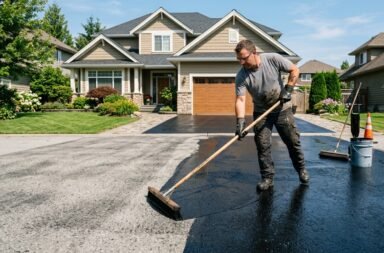

What Is Asphalt Crack Filling?
Asphalt crack filling is a maintenance process used to place a suitable material into cracks that have developed in an asphalt surface. The purpose is to reduce the amount of water that can enter the crack and reach the pavement layers below.
Not every crack should necessarily be treated in exactly the same way. The condition, size, location, and movement of the crack all influence the appropriate treatment. FHWA distinguishes crack filling from crack sealing, noting that filling is generally used for nonworking cracks, while sealing is more appropriate for cracks that experience significant movement.
A professional contractor can evaluate the pavement and determine whether filling, sealing, patching, resurfacing, or another repair is appropriate.
Why Water Is a Major Threat to Asphalt
Water is one of the biggest contributors to pavement deterioration. When asphalt develops cracks, rainwater and other moisture can find a pathway into the pavement structure.
Once water gets below the surface, it can weaken supporting layers and contribute to deterioration. The result may be additional cracking, potholes, depressions, and other pavement problems.
Sealing cracks stops water and structural damage.
While crack treatment cannot solve every underlying pavement problem, reducing moisture infiltration can slow the deterioration process. FHWA notes that crack filling and sealing help slow pavement deterioration by reducing moisture ingress into pavement layers.
This makes asphalt crack filling an important preventive maintenance measure rather than simply a cosmetic repair.
Small Cracks Can Become Bigger Problems
One of the biggest mistakes property owners can make is assuming that a narrow crack is not worth addressing.
Asphalt naturally experiences movement from traffic, temperature changes, aging, and environmental conditions. A small crack can gradually become wider or connect with other cracks. As water repeatedly enters the opening, the surrounding pavement may deteriorate more quickly.
Eventually, a relatively simple maintenance issue may turn into a larger repair project.
Addressing cracks early can help interrupt this progression. Instead of waiting until the pavement develops widespread cracking or potholes, property owners can incorporate asphalt crack filling into a regular pavement maintenance program.
How Asphalt Crack Filling Helps Extend Pavement Life
Preventive maintenance is generally focused on preserving pavement while it is still in reasonably good condition. Crack treatment is one example of this approach.
FHWA research identifies crack sealing and filling as common pavement maintenance operations and reports that these treatments are used to reduce water infiltration and help extend pavement service life.
The Asphalt Institute also identifies crack sealing as a pavement preservation technique that can help prevent moisture and debris from entering cracks and contribute to longer pavement life.
Regular asphalt crack filling can therefore provide several benefits:
- Reduces moisture infiltration
- Helps slow pavement deterioration
- Protects surrounding asphalt from further damage
- Helps prevent cracks from becoming larger defects
- Supports a longer pavement service life
- Can reduce the need for more extensive repairs
- Improves the overall appearance of the pavement
The exact results depend on pavement condition, crack characteristics, climate, traffic, materials, and application quality.
The Difference Between Crack Filling and Crack Sealing
The terms crack filling and crack sealing are sometimes used interchangeably, but they can refer to different pavement treatments.
According to FHWA, crack filling is generally intended for nonworking cracks, while crack sealing is typically used for working cracks that experience greater movement. Crack sealing may require additional preparation and specialized materials.
This distinction matters because using the wrong treatment for a particular crack can result in poor performance.
For example, cracks that repeatedly open and close because of temperature changes may require a more flexible sealing treatment. Meanwhile, relatively stable cracks may be appropriate candidates for filling.
A qualified pavement professional should inspect the surface before recommending a treatment.
What Happens During Asphalt Crack Filling?
The exact procedure depends on the pavement and the material being used, but proper preparation is an important part of successful crack treatment.
A typical project may include several steps.
Inspecting the Pavement
The first step is identifying cracks and evaluating their condition. A contractor may look at crack width, depth, location, deterioration around the crack, and whether the crack appears to be moving.
The contractor should also look for signs of more serious structural problems that cannot be solved through crack filling alone.
Cleaning the Cracks
Dirt, vegetation, loose aggregate, and other debris can interfere with the repair material. Proper preparation helps provide a cleaner surface for the treatment.
For some crack sealing applications, routing and cleaning are part of the preparation process. The Asphalt Institute emphasizes proper preparation and avoiding overfilling when sealing cracks.
Applying the Crack Treatment Material
Once the crack has been prepared, an appropriate material is placed into the opening. The goal is to reduce moisture and debris infiltration while creating a treatment that is suitable for the pavement conditions.
Material selection matters because different cracks and pavement environments have different requirements.
Inspecting the Finished Work
After application, the treated area should be checked for adequate coverage and proper adhesion. Professional workmanship helps the treatment perform as intended and reduces the likelihood of premature failure.
When Should You Consider Asphalt Crack Filling?
The ideal time for crack filling depends on the pavement condition, weather, local climate, and type of cracks present.
Property owners should consider having their pavement inspected when they notice:
- New cracks appearing across the surface
- Longitudinal cracks
- Transverse cracks
- Cracks around parking spaces
- Cracks along pavement edges
- Multiple small cracks developing in the same area
- Water collecting near cracks
- Cracks becoming wider or more numerous
Early intervention is particularly useful because crack treatment is a preventive maintenance strategy. Once pavement deterioration becomes severe, crack filling alone may no longer be sufficient.
Why Preventive Maintenance Can Save Money
Pavement repairs can become more expensive as deterioration progresses. A small crack may require relatively straightforward maintenance, while a severely deteriorated area could eventually require patching, resurfacing, or reconstruction.
That does not mean crack filling prevents every future repair. Asphalt has a finite service life, and environmental exposure and traffic will continue to affect the surface.
However, maintaining pavement before major deterioration develops can help property owners manage repair needs more effectively.
FHWA describes crack treatment as a preventive maintenance activity intended to extend pavement life when appropriately applied.
For commercial properties, proactive maintenance can also help reduce disruptions to customers, employees, tenants, and visitors.
Asphalt Crack Filling for Parking Lots and Driveways
Crack filling is not limited to roads and highways. It can also be useful for private driveways, commercial parking lots, access roads, and other asphalt surfaces.
Parking lots experience repeated vehicle traffic, turning movements, weather exposure, and occasional heavy loads. Without regular maintenance, these conditions can accelerate surface deterioration.
A well-maintained parking lot also contributes to the appearance of a property. Cracked and deteriorating asphalt can make a commercial location look neglected, while a properly maintained pavement surface can create a cleaner and more professional first impression.
For homeowners, maintaining driveway cracks can similarly help preserve the appearance and usability of the property.
Choosing the Right Asphalt Professional
The quality of the repair is just as important as the decision to perform it.
When selecting a naples asphalt company, property owners should look for experience with pavement maintenance, crack treatment, asphalt repair, and related services. A reputable contractor should be willing to evaluate the condition of the pavement instead of automatically recommending the same treatment for every project.
Ask about the preparation process, materials being used, expected service life, and whether additional pavement problems need to be addressed.
It is also important to understand that crack filling is not a substitute for structural rehabilitation when the pavement has extensive base failure, severe alligator cracking, widespread potholes, or other significant deterioration.
Why Professional Asphalt Crack Filling Matters
Proper asphalt crack filling involves more than simply pouring material into a visible crack.
The contractor needs to determine whether the crack is suitable for filling, prepare the area correctly, select an appropriate material, and apply it according to the pavement’s conditions.
Poor preparation can limit adhesion and reduce performance. Applying too much material can also create surface problems. The Asphalt Institute specifically notes that excess crack-sealing material can contribute to complaints and recommends careful application.
Professional maintenance helps ensure that the treatment is being used where it makes sense and that the pavement receives the appropriate level of care.
Protect Your Pavement Before Damage Spreads
Asphalt maintenance works best when it is proactive. Waiting until cracks become wide, interconnected, or surrounded by crumbling asphalt can make the problem more difficult and expensive to address.
Asphalt crack filling provides a practical way to address certain cracks before moisture and debris can contribute to more extensive deterioration. By incorporating crack treatment into a broader pavement maintenance plan, property owners can help protect their investment and keep asphalt surfaces functional and attractive.
If cracks are appearing on your driveway, parking lot, or commercial pavement, an inspection can help determine the appropriate next step. Early maintenance may help preserve the existing pavement and delay the need for more extensive rehabilitation.
Frequently Asked Questions
How does asphalt crack filling protect pavement?
Asphalt crack filling places material into suitable pavement cracks to reduce water and debris infiltration. Reducing moisture entry can slow deterioration of the pavement layers and help preserve the existing asphalt surface.
Is asphalt crack filling the same as crack sealing?
No. Although both treatments address pavement cracks, FHWA generally distinguishes crack filling as a treatment for nonworking cracks and crack sealing as a treatment for cracks that experience greater movement.
Can crack filling stop potholes?
Crack filling can help reduce moisture infiltration that contributes to pavement deterioration, but it cannot guarantee that potholes will never develop. Potholes can result from several factors, including structural problems and severe pavement deterioration.
When should cracks be filled?
Cracks should generally be addressed while the surrounding pavement remains in reasonably good condition. A professional inspection can determine whether filling, sealing, patching, or another treatment is most appropriate.
Does crack filling make asphalt last longer?
Properly selected and applied crack treatments can help slow deterioration by reducing moisture infiltration. FHWA recognizes crack treatment as a pavement preservation technique that can extend pavement service life.
Can all asphalt cracks be filled?
No. The appropriate treatment depends on the crack type, size, movement, surrounding pavement condition, and underlying causes. Severe structural cracking may require more extensive repairs.
Why is water so damaging to asphalt?
Water can enter through cracks and contribute to deterioration of pavement layers beneath the asphalt. Reducing moisture infiltration is therefore an important part of pavement preservation.
How often should asphalt crack filling be performed?
There is no universal schedule. Pavement condition, traffic, climate, age, drainage, and previous repairs all affect maintenance needs. Regular inspections can help identify cracks before they become more serious.